
Smart Thermostats vs Programmable Thermostats: What is the Difference?
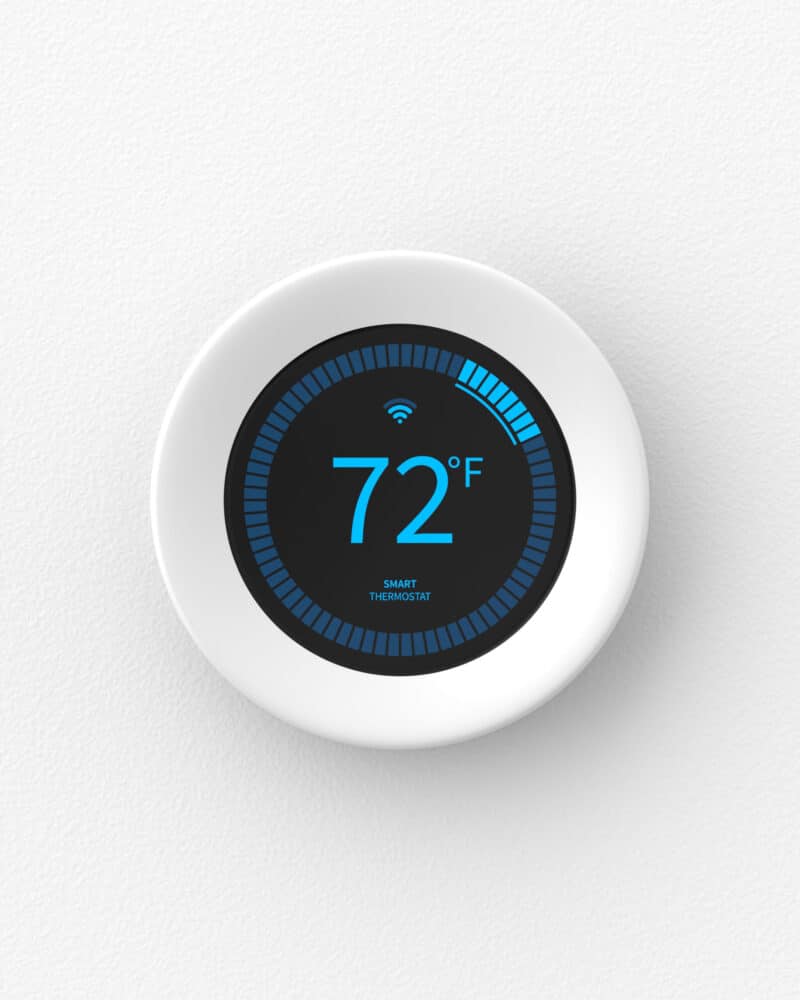
Homeowners often compare smart thermostats and programmable thermostats when upgrading their home heating and cooling systems. Both options regulate indoor temperature, but they rely on different technology to manage comfort. A standard programmable thermostat runs on fixed daily schedules that you enter manually, while a smart thermostat connects to your wireless home network, which allows for remote adjustments and automatic schedule learning.
Understanding how these devices work will help you choose the right control for your heating and A/C equipment. Glasco Heating & Air Conditioning Inc. helps homeowners throughout Hartford County select controls that get the most out of their HVAC system.
How Programmable Thermostats Function
Programmable thermostats let you set automatic temperature adjustments on a fixed schedule. These controls manage system operation using internal timers rather than a network connection.
Schedule Configurations and Daily Operation
Most models offer a few programming options to match different daily routines:
- 5-2 day models: Run one uniform schedule for weekdays and a separate schedule for weekends.
- 5-1-1 day models: Allow one schedule for weekdays, plus individual schedules for Saturday and Sunday.
- 7-day models: Permit a unique schedule for every day of the week.
You enter target temperatures for specific time windows, such as morning, daytime away, evening, and sleep, and the device holds those settings until you manually override the temperature at the keypad.
Energy Savings Potential
According to the U.S. Department of Energy, homeowners can save up to 10% a year on heating and cooling by turning back the thermostat 7 to 10 degrees Fahrenheit for 8 hours a day. Programmable units automate these setbacks, so you don’t have to adjust the temperature manually twice a day.
Maintenance and Power Requirements
Programmable units run on basic low-voltage wiring, usually powered by a 24 VAC transformer in the air handler or furnace. Most models use AA or AAA alkaline batteries to retain their settings during a power outage, and they need no internet connection or software updates to operate.
How Smart Thermostats Function
Smart thermostats build on basic scheduling by adding Wi-Fi communication and onboard processing. These units connect directly to your home wireless network, enabling real-time remote control from a smartphone app or web browser.
Adaptive Learning and Geofencing Features
Smart devices go beyond standard timers by analyzing how residents actually use their HVAC system:
- Adaptive learning: Certain models track your manual adjustments over about a week and build a custom schedule based on your habits, without any manual programming.
- Geofencing: Using your mobile device’s GPS data, the thermostat creates a virtual perimeter around your home. It automatically sets back operation when you leave and turns it back on when you return.
Verified Energy Efficiency Data
Data from the U.S. Environmental Protection Agency’s ENERGY STAR program shows that certified smart thermostats save homeowners an average of 8% on heating and cooling bills. That efficiency gain works out to roughly 500 kWh of electricity or 50 therms of gas saved each year.
Diagnostic Monitoring and System Alerts
Smart controls monitor system run times and track local weather changes. They send digital air filter change reminders based on actual runtime hours rather than a fixed calendar schedule. In cold weather, they can also send instant phone alerts if indoor temperatures drop below a set safety threshold, helping prevent frozen pipes in Connecticut homes.
Smart Thermostats vs Programmable Thermostats: Key Differences
Choosing between the two comes down to system compatibility, wiring requirements, and how you want to operate your system long term.
C-Wire and Electrical Requirements
Smart thermostats need continuous electrical power to run their Wi-Fi radios and digital displays. They rely on a common wire, or C-wire, which supplies continuous 24 VAC power from the HVAC control board.
- Older wiring: Older homes in Connecticut often have two-wire or four-wire thermostat cables that lack a dedicated C-wire.
- Adapter options: Installing a smart unit on older wiring may require running a new multi-conductor cable or installing a power extender kit at the furnace.
- Programmable units: Standard programmable models don’t need a continuous C-wire, since their power draw is minimal and they run mostly on battery.
HVAC Equipment Compatibility
Not every thermostat works with every heating and cooling system:
- Multi-stage systems: Two-stage furnaces or multi-stage A/C units need a thermostat designed to manage stage cycling correctly.
- Heat pumps: Heat pump systems need controls that manage auxiliary heat strip activation efficiently during cold weather.
- Ductless equipment: Ductless mini-split units often require proprietary wireless controls or specialized smart interfaces rather than a standard wall thermostat.
- Line-voltage systems: Electric baseboard heating runs on 120-volt or 240-volt power. A standard 24-volt smart or programmable thermostat will fail if connected to a line-voltage circuit without a relay.
Operating Comparisons
Programmable thermostats have lower upfront equipment costs and simple physical controls, but they don’t offer remote access. Smart thermostats cost more upfront but add energy tracking, automated adjustments, and remote monitoring.
Choosing the Right Thermostat for Your Home
The right choice depends on your schedule, your technology preferences, and your existing equipment. Programmable controls suit homeowners who prefer a simple manual setup without internet connectivity, while smart models suit homeowners who want remote monitoring and automated adjustments.
Matching the right control to your equipment supports reliable operation and long-term system health. Professional installation ensures your wiring, control board, and thermostat all communicate correctly for efficient heating and cooling in every season.
Contact Glasco Heating & Air Conditioning Inc.
If you need help selecting or installing a thermostat for your home, reach out to the experienced team at Glasco Heating & Air Conditioning Inc. Our technicians will evaluate your existing HVAC equipment and guide you to the right thermostat for reliable comfort.